
Burn After Reading (2008) Script Review
A humorous black comedy that starts off strongly yet ends a little fuzzy and baffling.
Welcome to Script by Line. This week, we’ll be taking a look at the 2008 Coen Brothers’ script for Burn After Reading, and seeing what we can learn about writing comedy.
Let’s dive in.
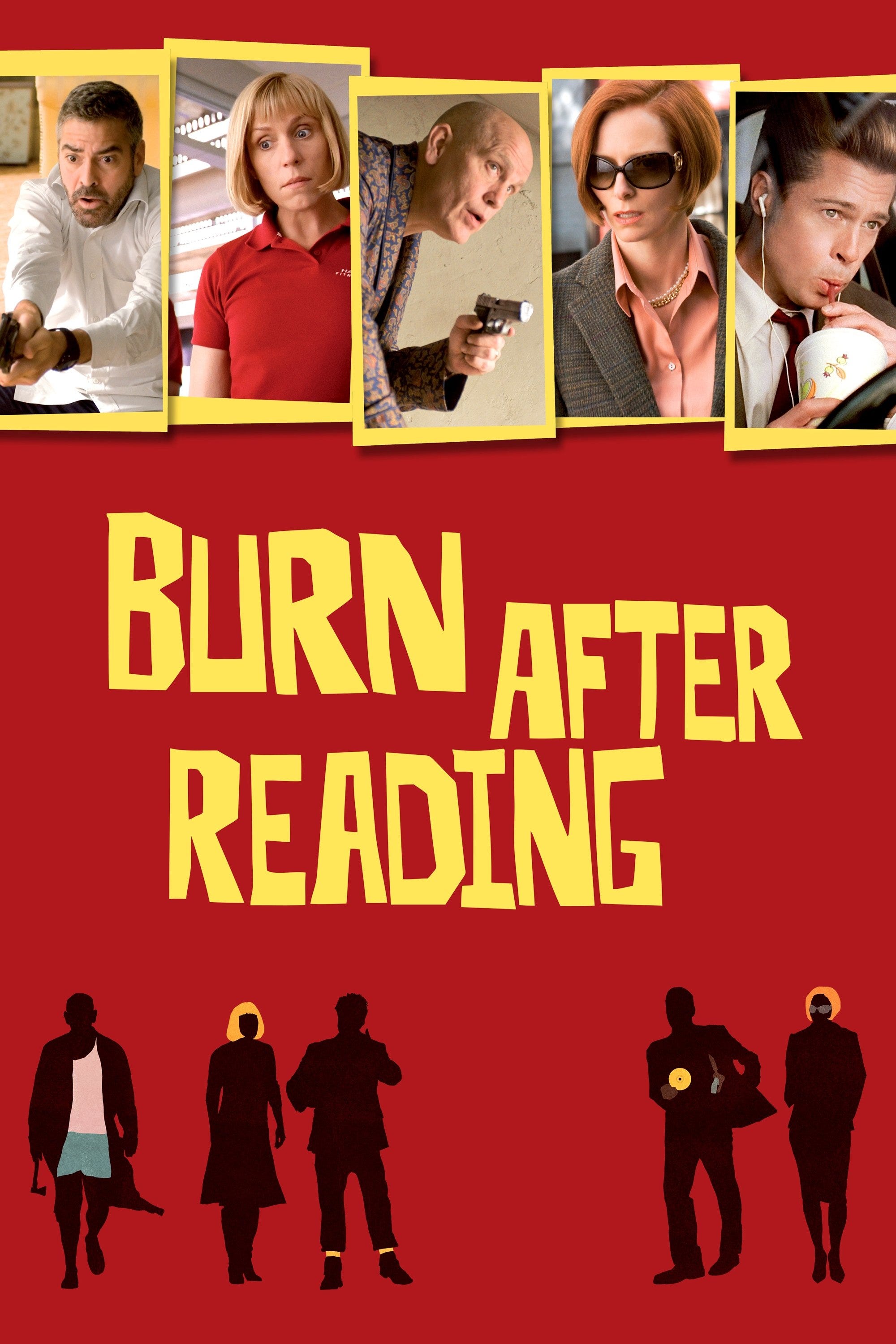
Logline: A disk containing mysterious information from a CIA agent ends up in the hands of two unscrupulous and daft gym employees who attempt to sell it.
Written by: Joel Coen & Ethan Coen
Pages: 120
Scenes: 150
Burn After Reading is zany, let’s put it like that. In a good way! Joel Coen and Ethan Coen are in familiar territory: characters caught up in events beyond their understanding or capability; a confusion of coincidences of increasing absurdity; outcomes so unexpectedly incredulous that you can only gape or laugh.
What’s it about, though? I’m not sure. On the superficial level, it’s about a woman and her friend who see an opportunity to get some easy money for the former’s cosmetic surgery procedures. But it’s also about… nothing. Just unfortunate characters caught in unfortunate circumstances. Even the CIA officers in the final scene, acting like a Greek chorus, haven’t a clue. Joel Coen says it’s about “the culture of the Central Intelligence Agency and the culture of physical fitness in Washington, D.C., and what happens when those two worlds collide.
“And it’s also about Internet dating,” he adds. Perhaps a touch wryly.
Two worlds collide unexpectedly. The first is the world of Osbourne Cox. He’s a former CIA analyst who quit his job rather than endure the indignity of being transferred to a lower clearance job. He’ll use his free time to write his memoirs. He’s an alcoholic and a narcissist who thinks he’s smarter than everyone else. Just not smart enough to realize that his wife, Katie Cox, is sleeping with Harry Pfarrer.
Harry Pfarrer is a U.S. Marshall. But he’s mostly a charming, philandering, and paranoid doofus. Katie wants to divorce Osbourne and marry Harry. Harry, however, demurs. He’s clearly reluctant to end his marriage to best-selling children’s author Sandy Pfarrer. He doesn’t realize that she has a younger lover on the side when she goes on her book tour. But Katie initiates the divorce process anyway, not so much as dropping a hint to Osbourne. The lawyer requests that she get all the financials and documents she can to assess what she can claim. But, somewhere around this time, Katie appears to have accidentally copied some of Osbourne’s incomplete memoirs. And the lawyer’s secretary accidentally leaves a disk copy of these memoirs in the ladies locker room at the Hardbodies gym.
Enter the second world, the world of Linda Litzke and Chad Feldheimer. Linda and Chad are gym trainers at Hardbodies. Linda wants to get a series of cosmetic surgeries; she’s convinced they’ll make her more appealing. But the surgeries are pricey; and the gym healthcare plan won’t cover it. Chad, a well-meaning airhead, gets the idea to blackmail Osbourne for money when they find the disk. To make it more complicated, Linda begins dating Harry after they meet on a dating site. Chaos ensures, Coen brothers’ style.
Though they never interact or meet except in one brief scene, Linda and Osbourne are alike. Linda only ever thinks about herself (mostly) and is obsessed with the money; it leads to tragic outcomes. Osbourne only ever thinks about himself (all the time) and is obsessed with his own sense of self-importance. When Linda tries to sell the information in the memoirs to the Russians, they’re unimpressed.
The pleasure of reading a script by the Coen brothers is that you’re never quite sure where it’s going. You can only trust that it’ll be worth it. For the most part, they deliver. But Burn After Reading loses steam little by little, like a slowly deflating balloon. It also leads to a less than satisfying ending; one wonders if they either ran out of ways to wrap it up, or if they knew exactly what they were doing when they abruptly cut away from a climactic beating outside Osbourne’s lawn to two CIA supervisors providing exposition to tell us what happened.
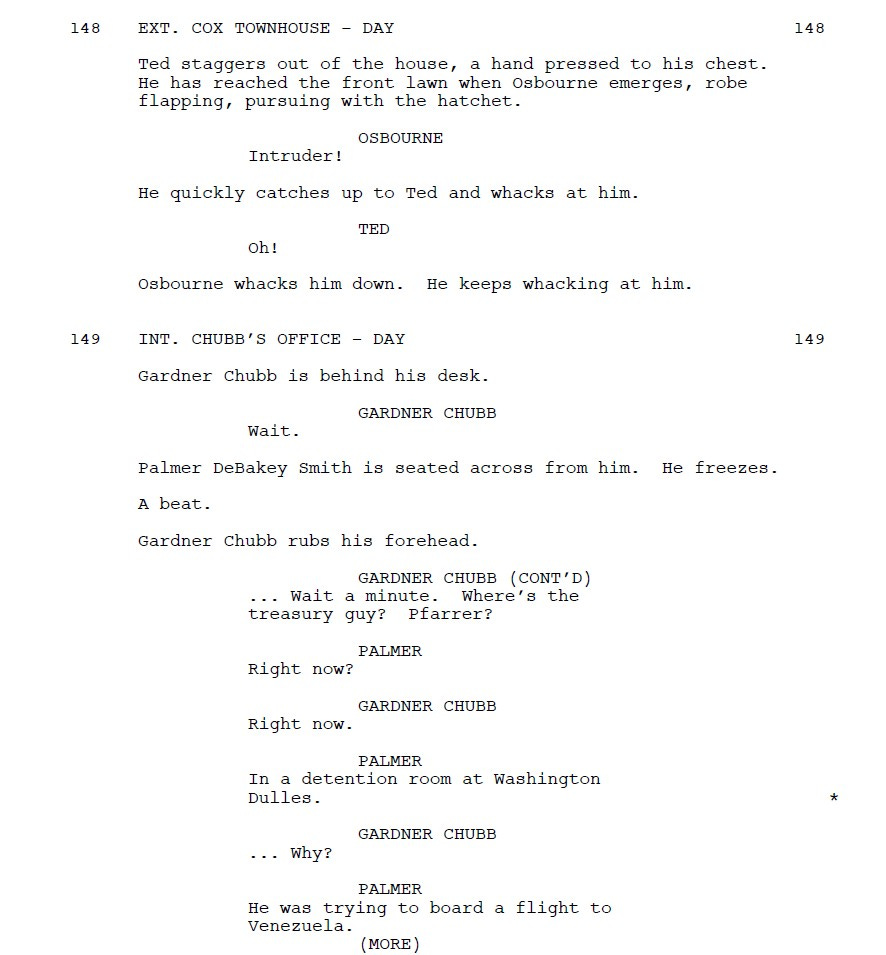
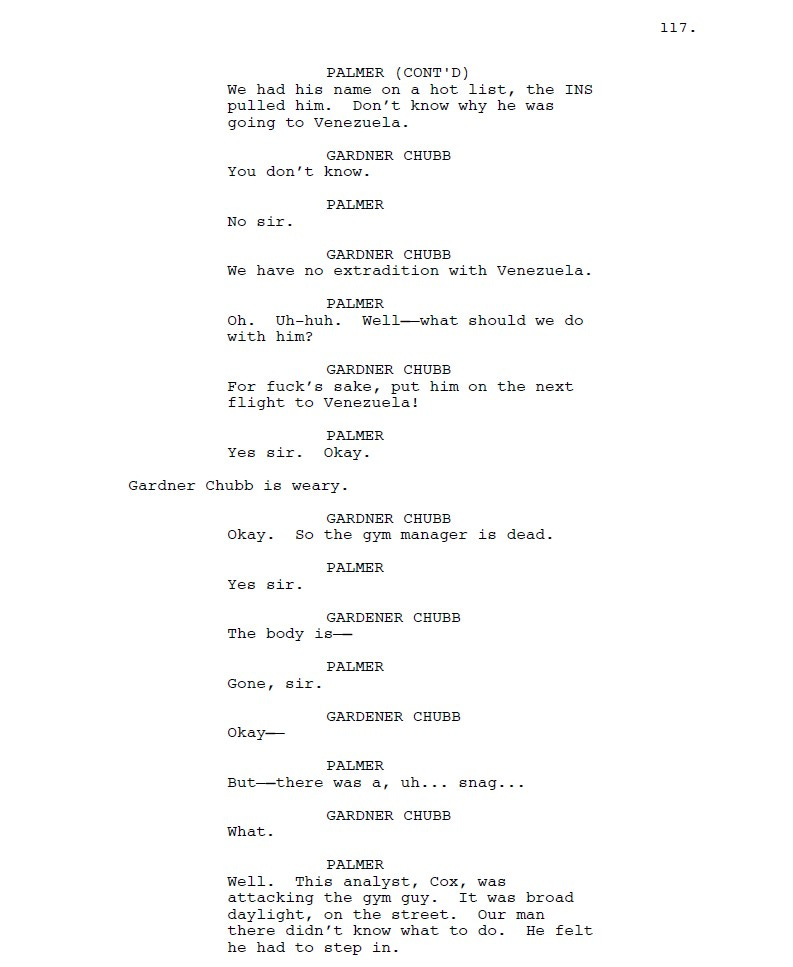
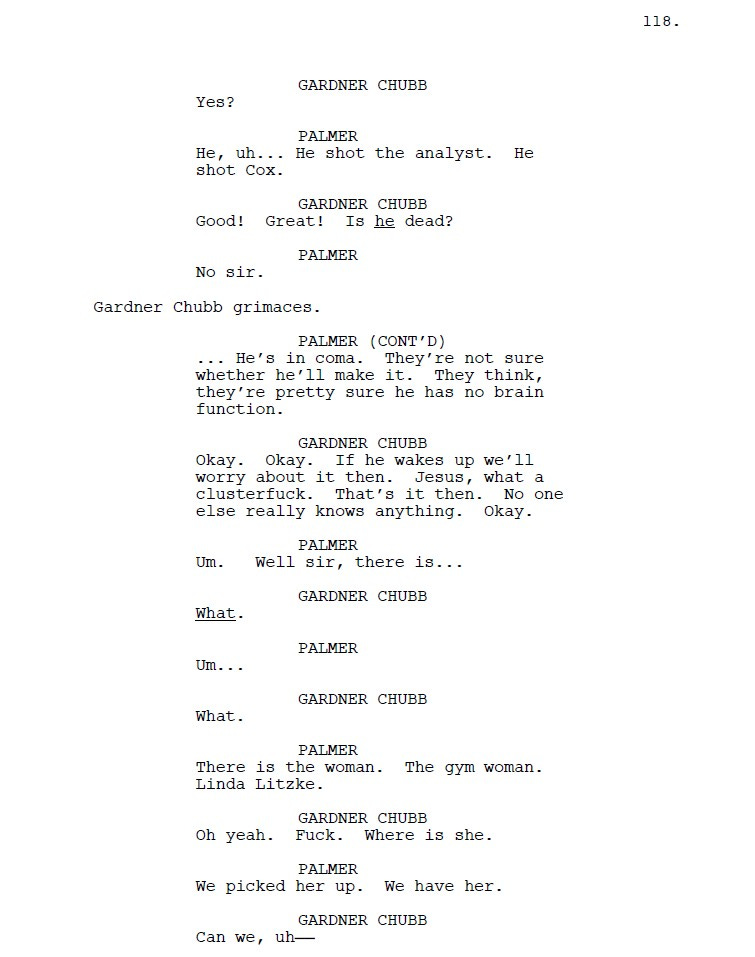
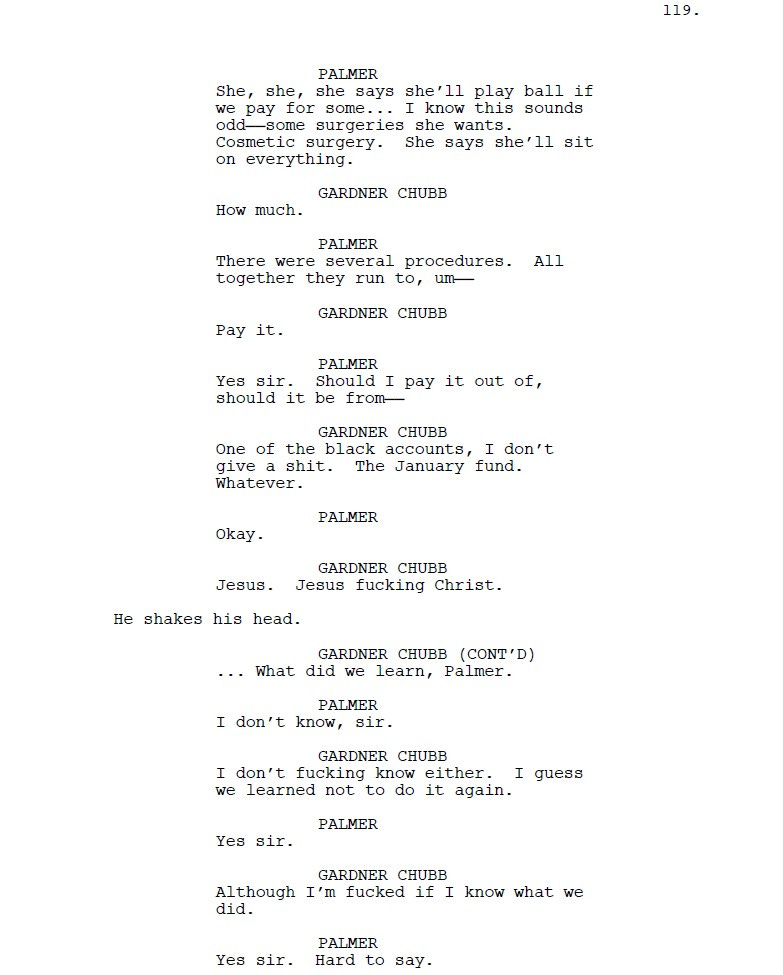
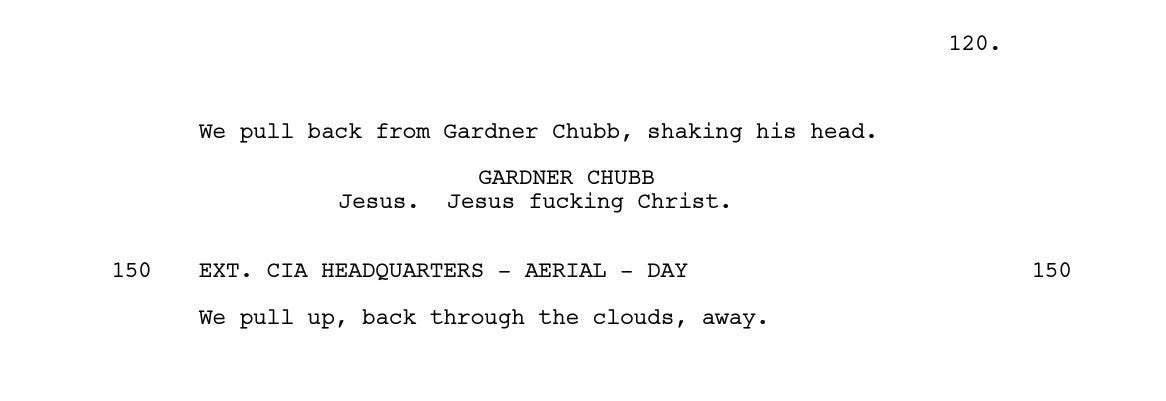
Was there any point to any of this? Or are the Coens reveling in the idea that not everything has to have any meaning?
Four Screenwriting Lessons from Burn After Reading
Still, there’s always a lot of stuff to find and learn about in a Coen brothers’ screenplay. Burn After Reading is in their wheelhouse, given their ability to find the humor in the darkest situations (except in No Country for Old Men; that one is the furthest away from their usual style). And the Coen brothers know how to write good comedy. In Burn After Reading, here are four ways to create humor:
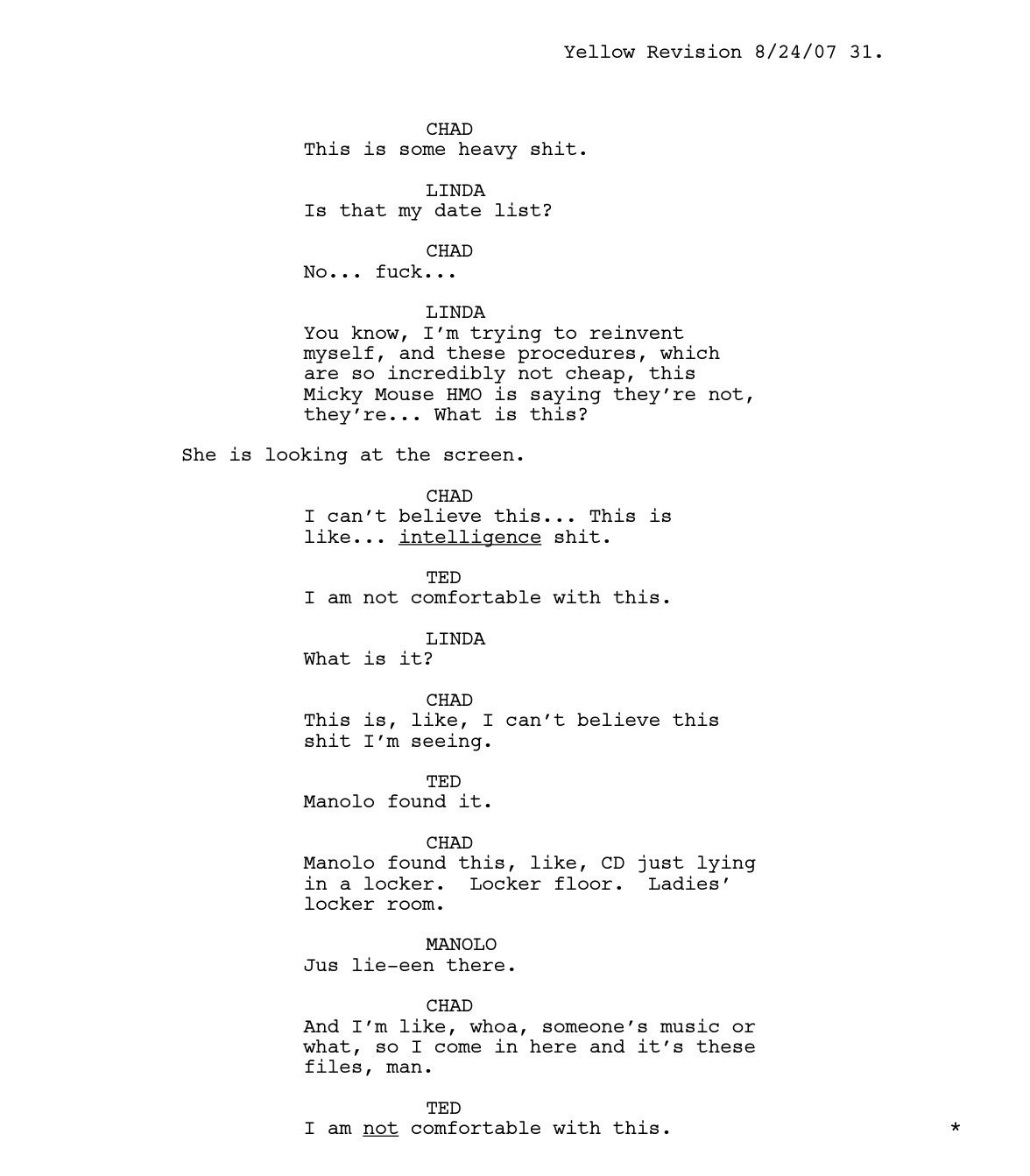
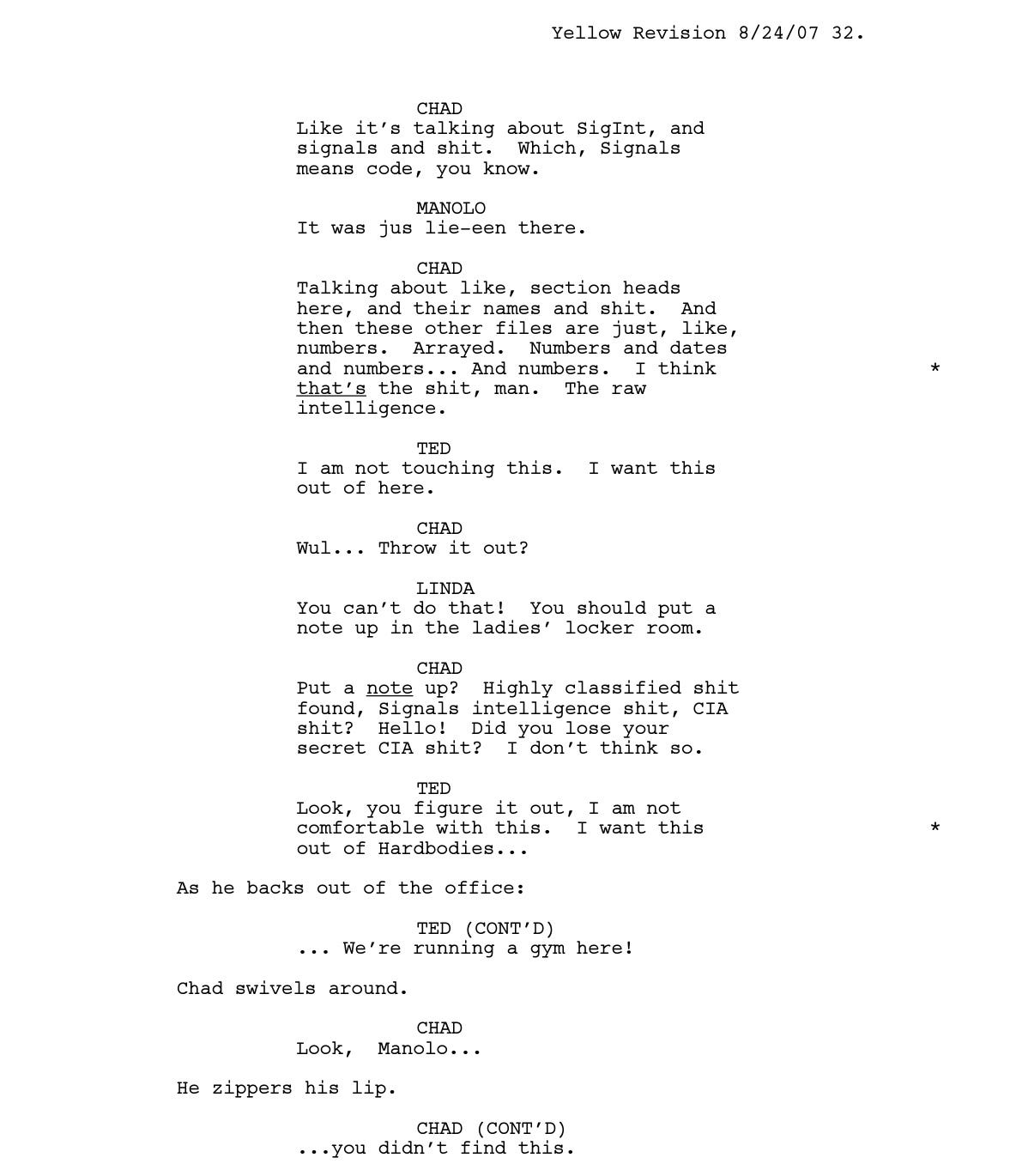
Repetition
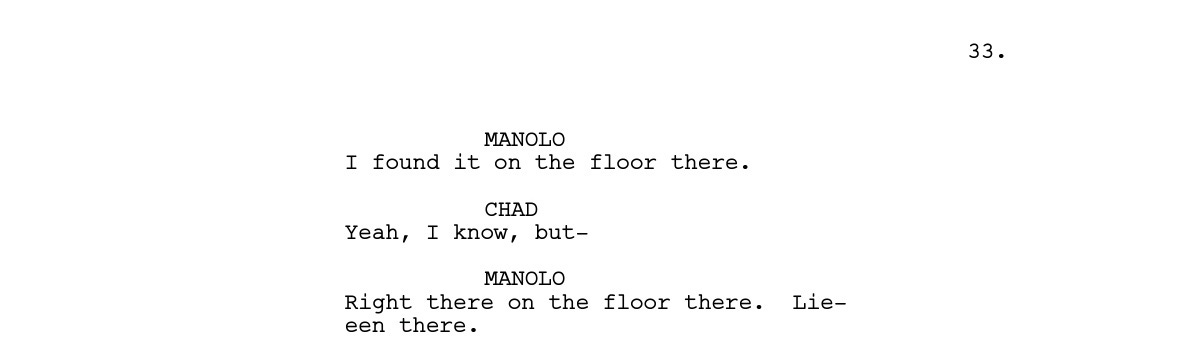
Take the moment in which the Hardbodies’ employees are going through the disk. The employee Manolo repeatedly mentions where he found it; when the scene concludes on that same line, the effect is funny because repeating the line sets it up for laughs.
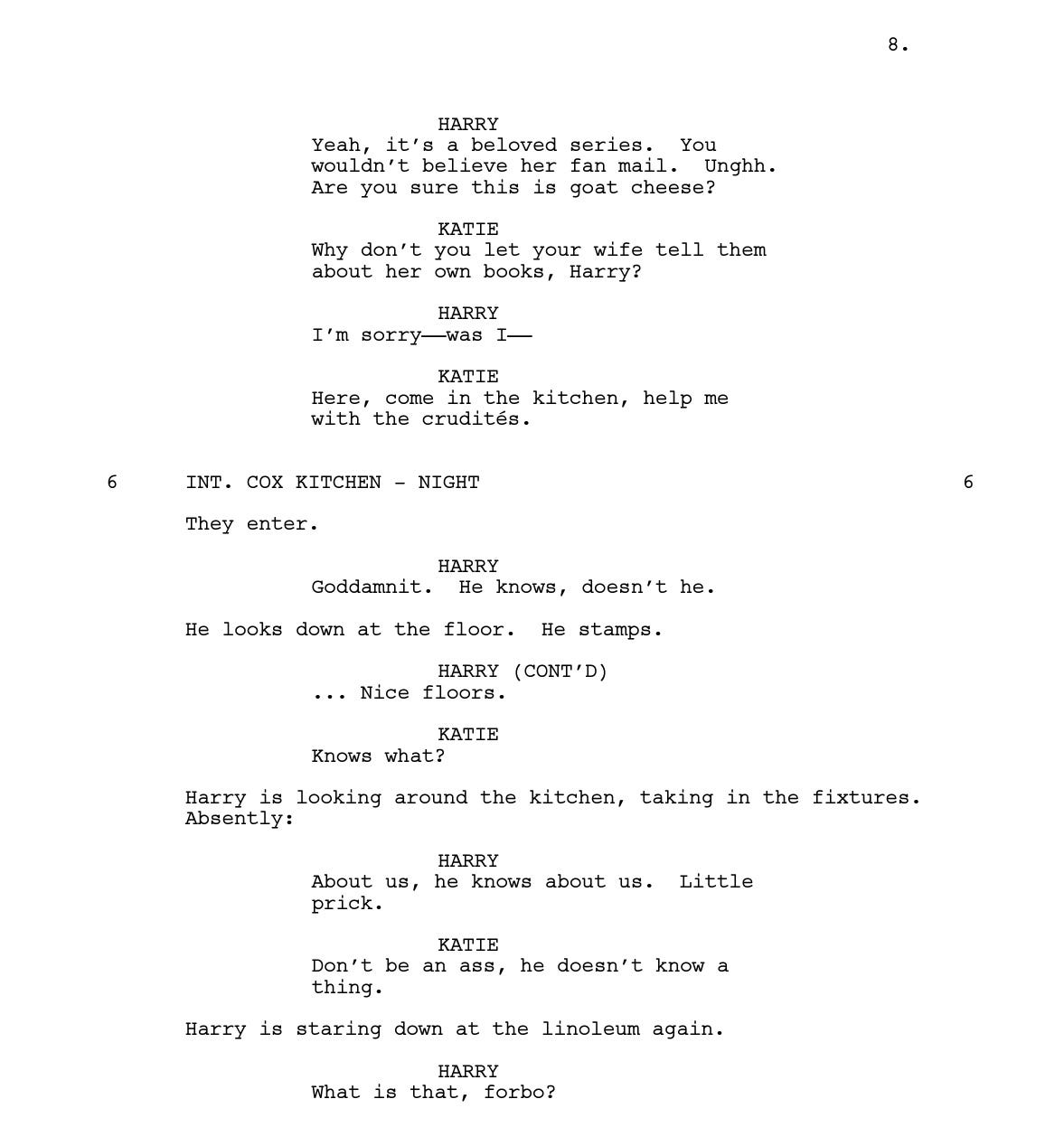
Another instance of repetition occurs is when Harry displays his obsession with floors. First at Osbourne’s…
And then at Linda’s…
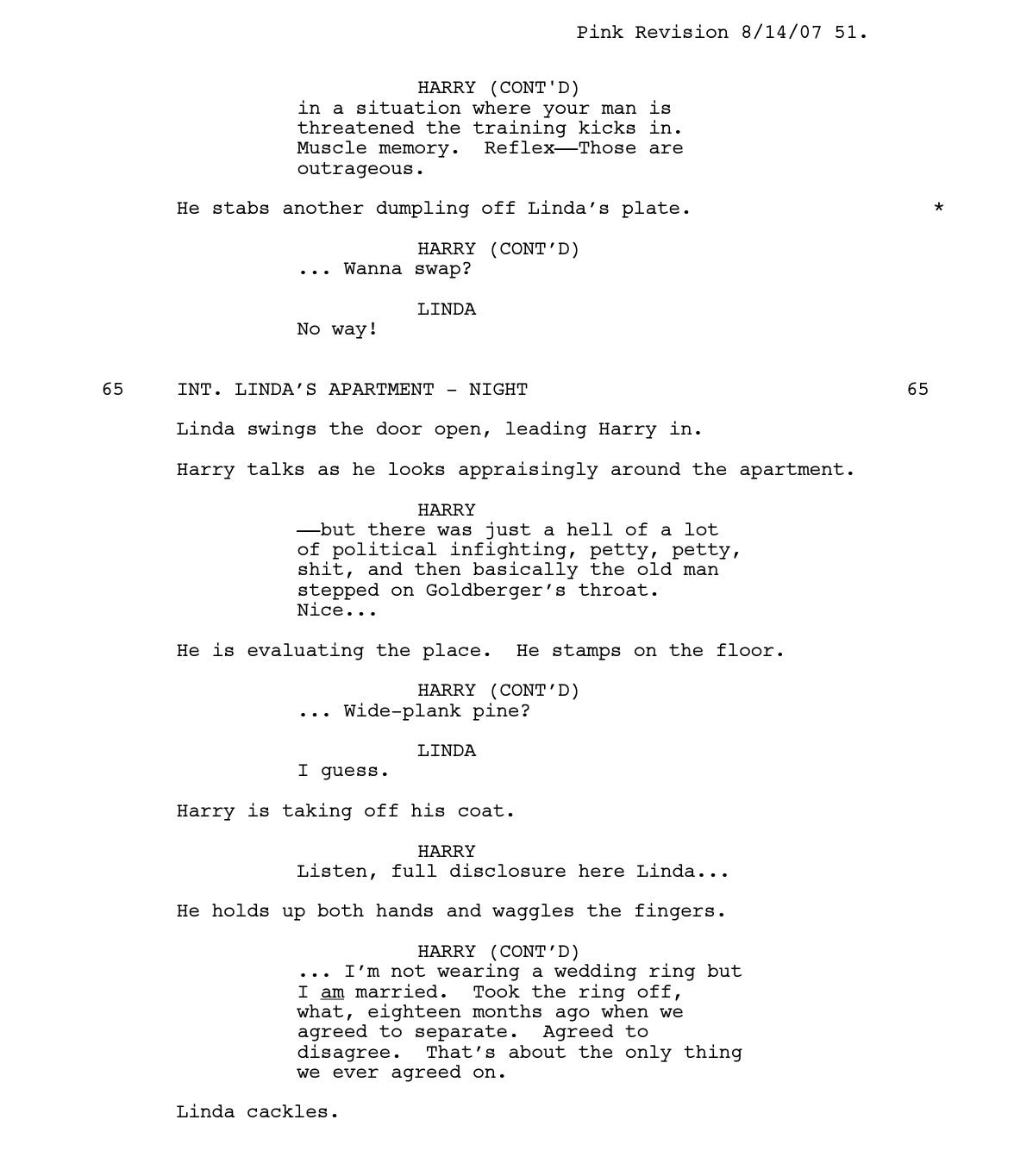
Here, repetition also is used as a character trait—in this case, Harry’s craftsman’s knowledge tells us something about himself, setting up the eventual reveal of what he’s been building in the basement.
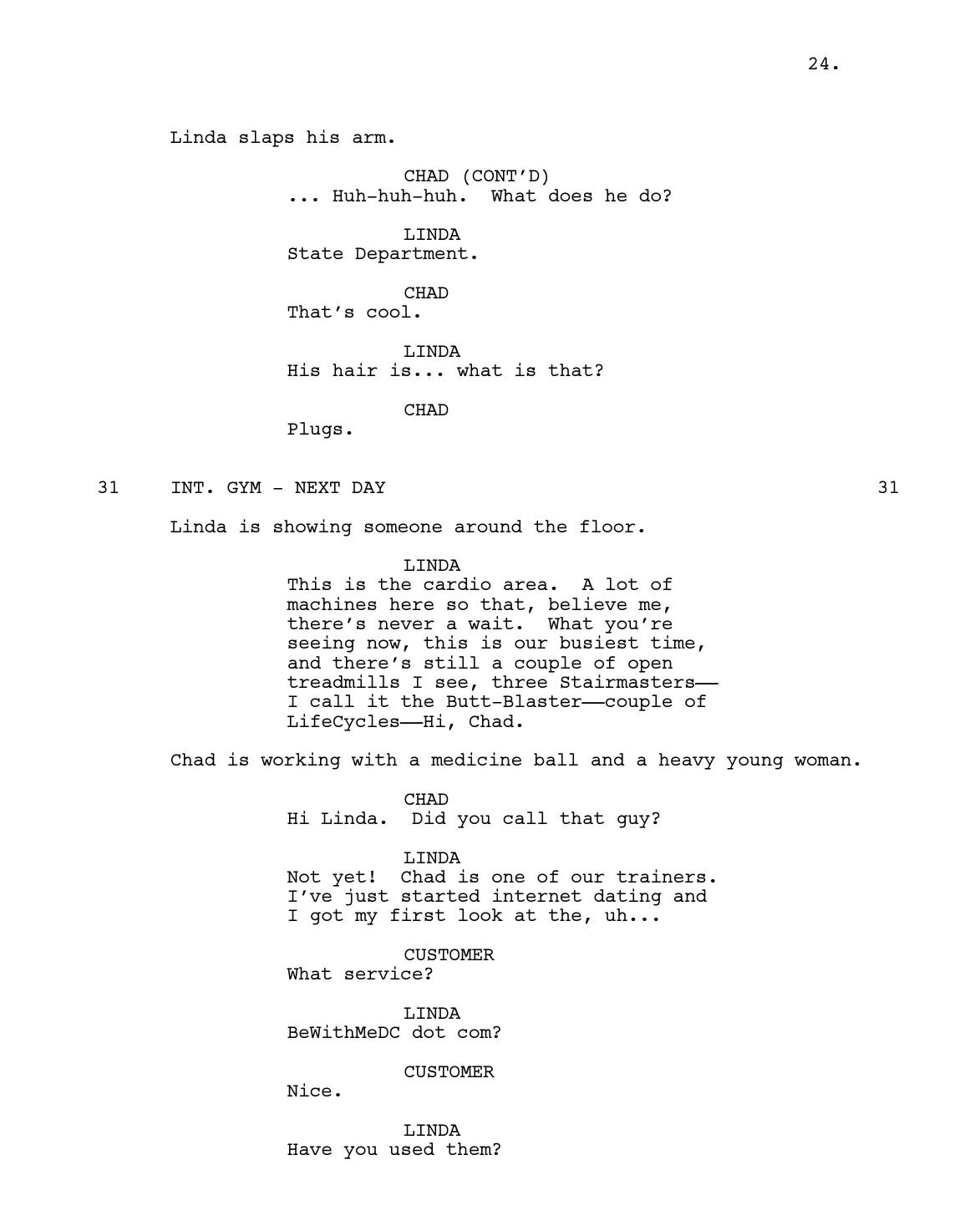
Digressions
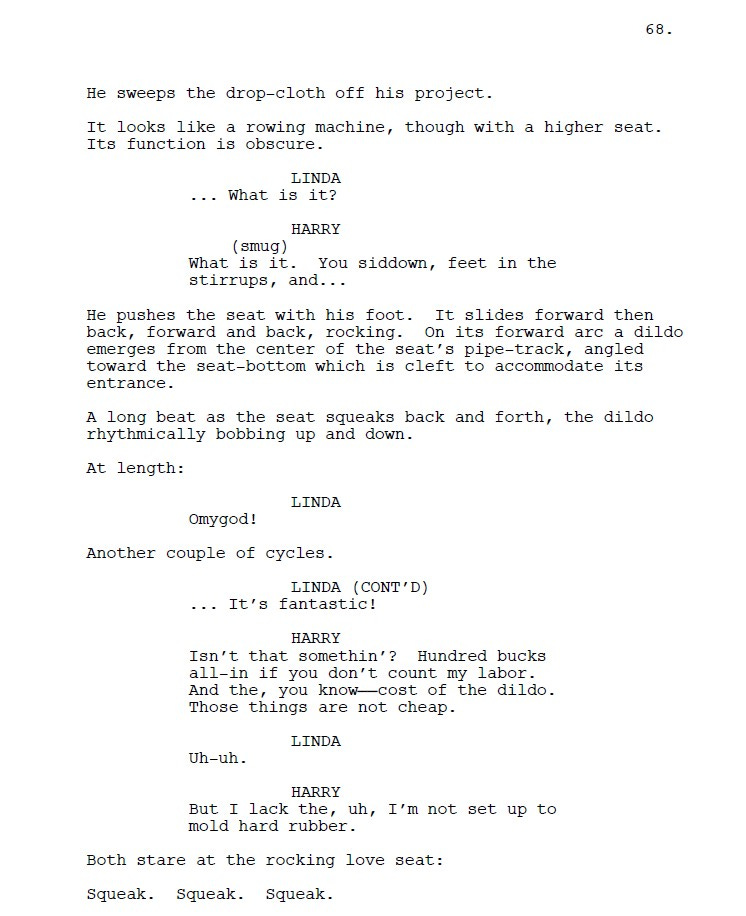
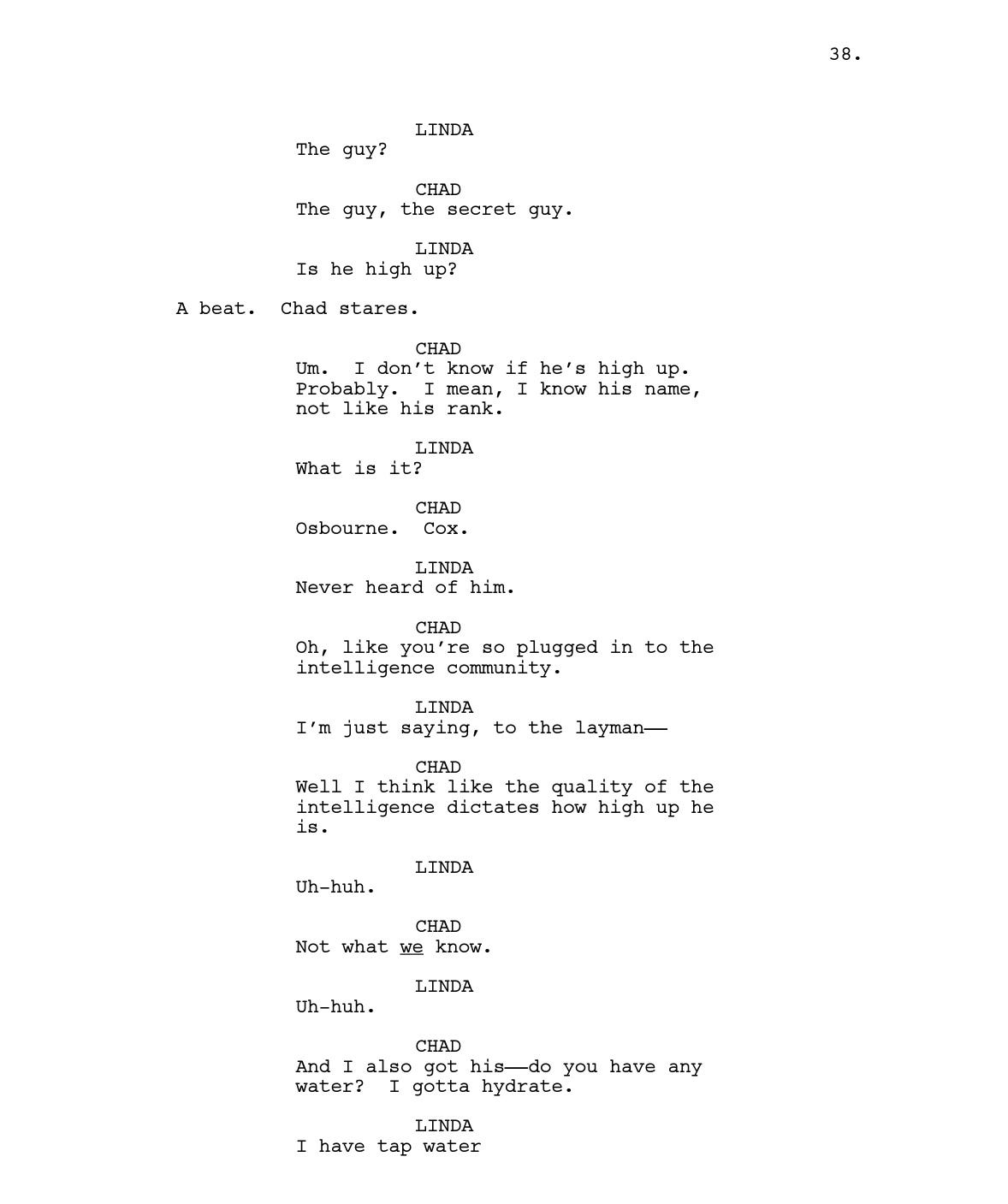
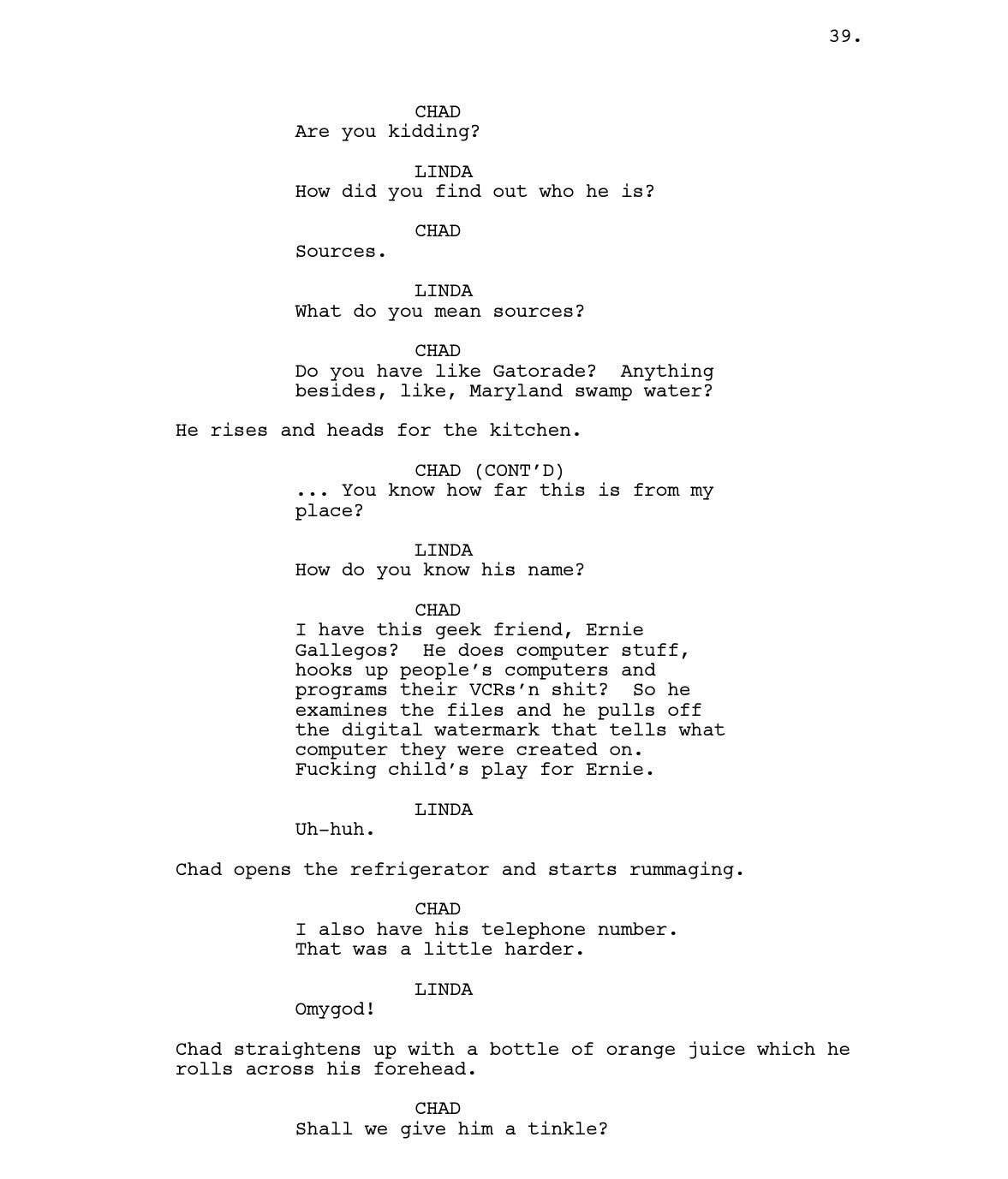
When a character abruptly breaks off from their main train of thought to ask about or say something innocuous, something about the disruption feels comedic. The more absurd the digression, the better. I suspect it’s also because it breaks the monotony and feels less like a scene and more lifelike. Here’s an example:
Unexpected outcomes
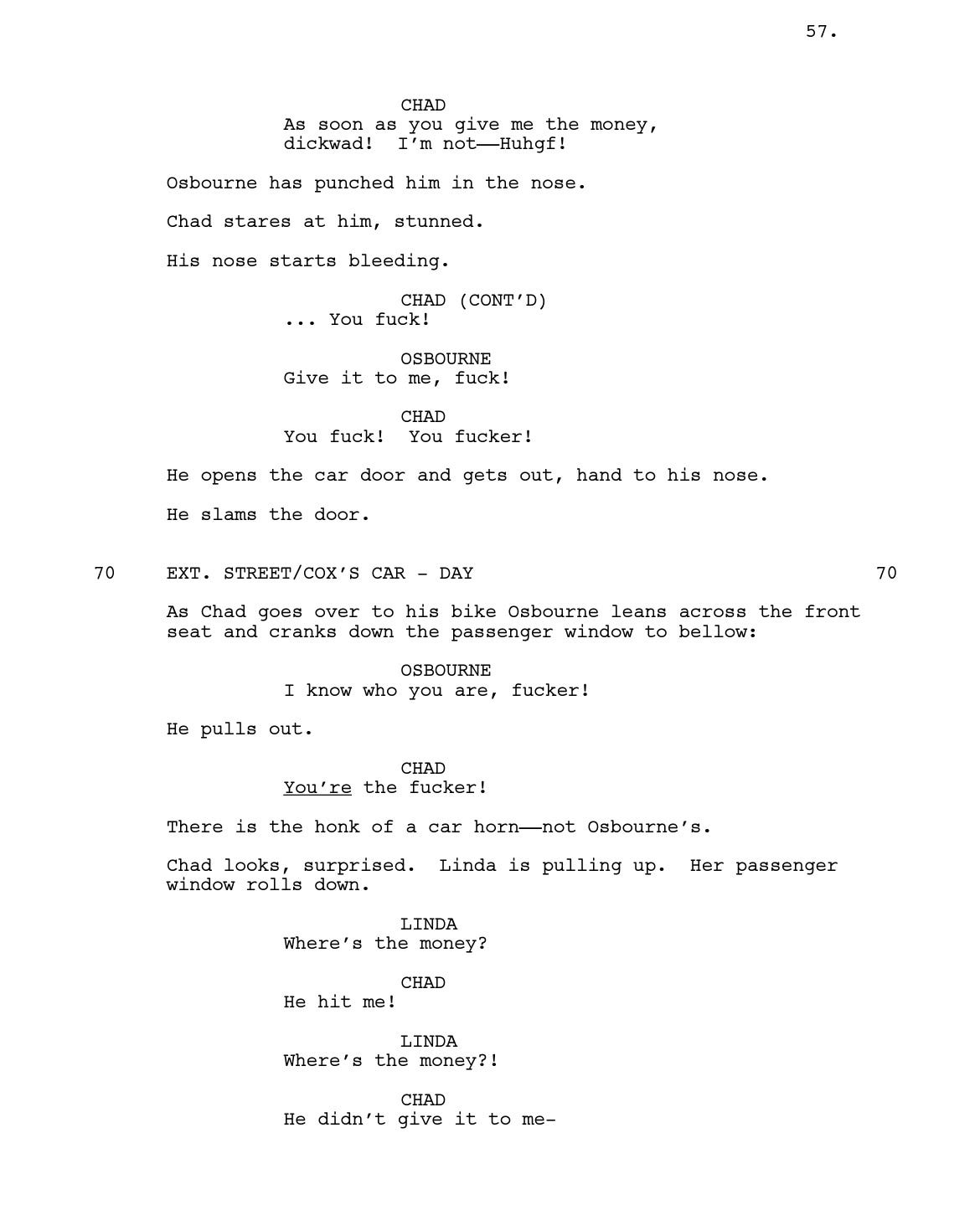
The most obvious way to get a laugh is to deliver an outcome or punchline that is unexpected. Take the scene where Chad goes to meet Osbourne. Instead of finding Osbourne scared and ready to pay up, poor Chad gets punched in the nose. Worst of all, he doesn’t get the money!
Then again, Chad isn’t exactly the smartest guy on the planet. But he has a nice rapport with Linda, which is why his absence in the script’s final third is felt. When he gets shot and killed, it’s as if the humor vibe got darker.
Uncomfortable situations
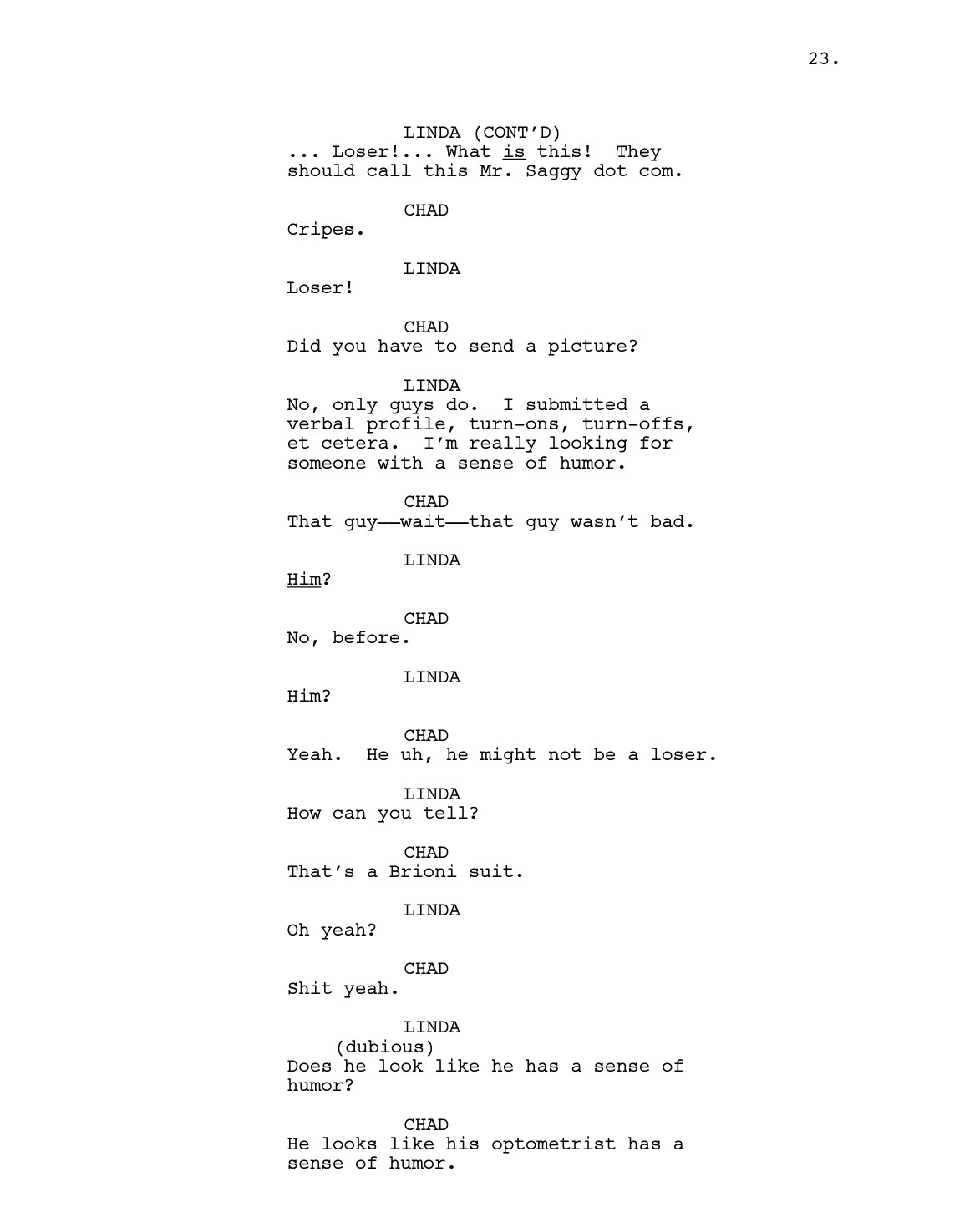
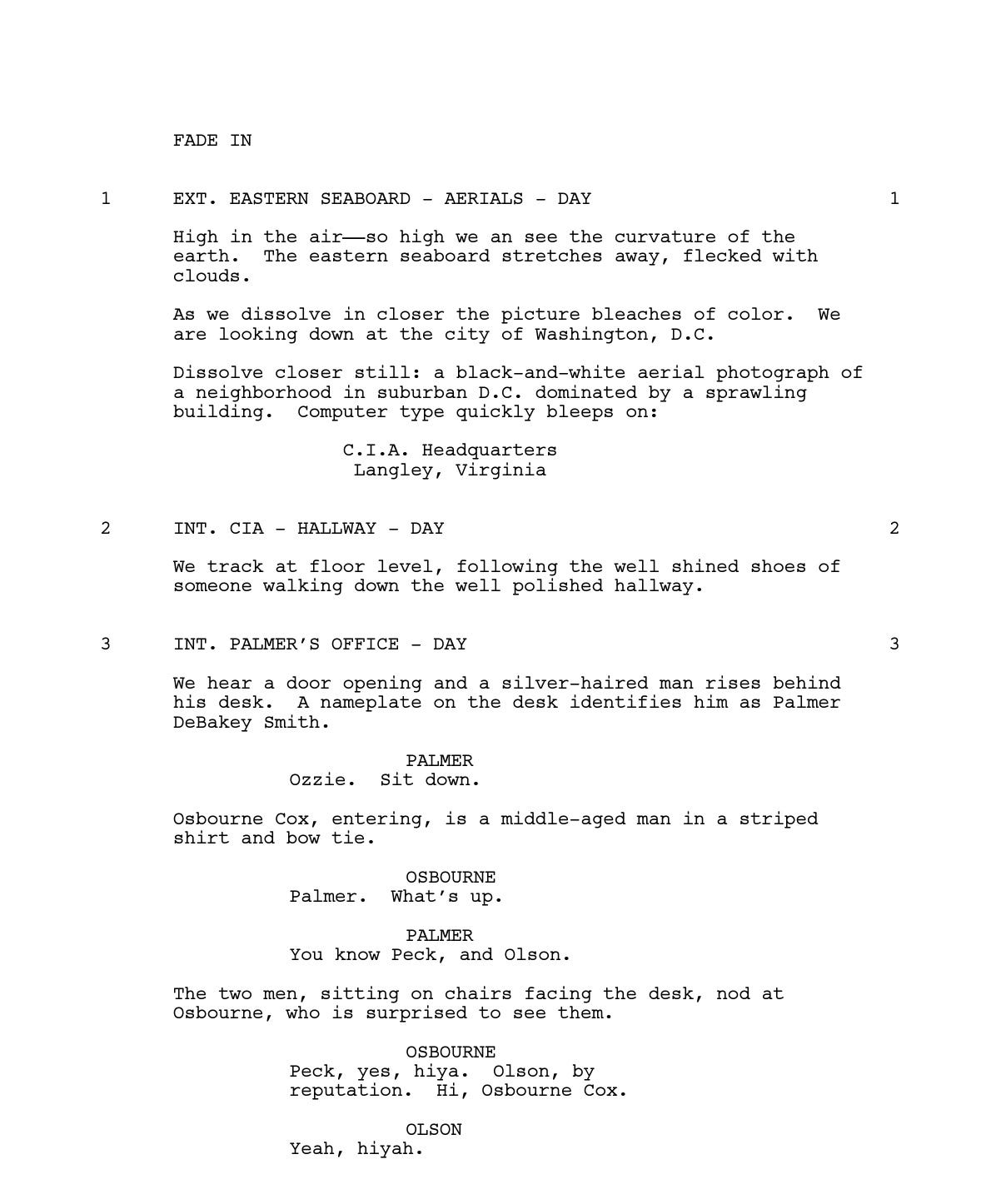
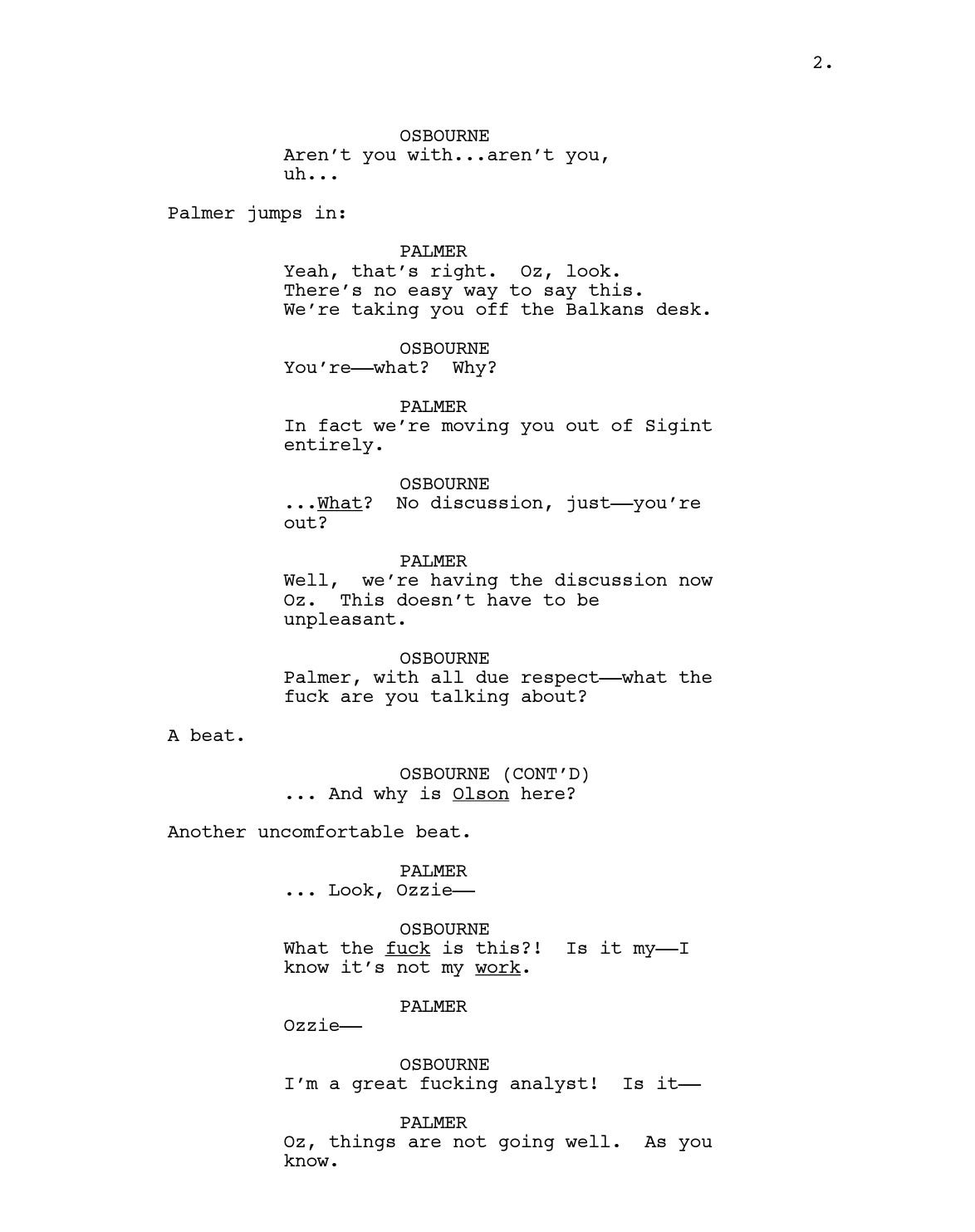
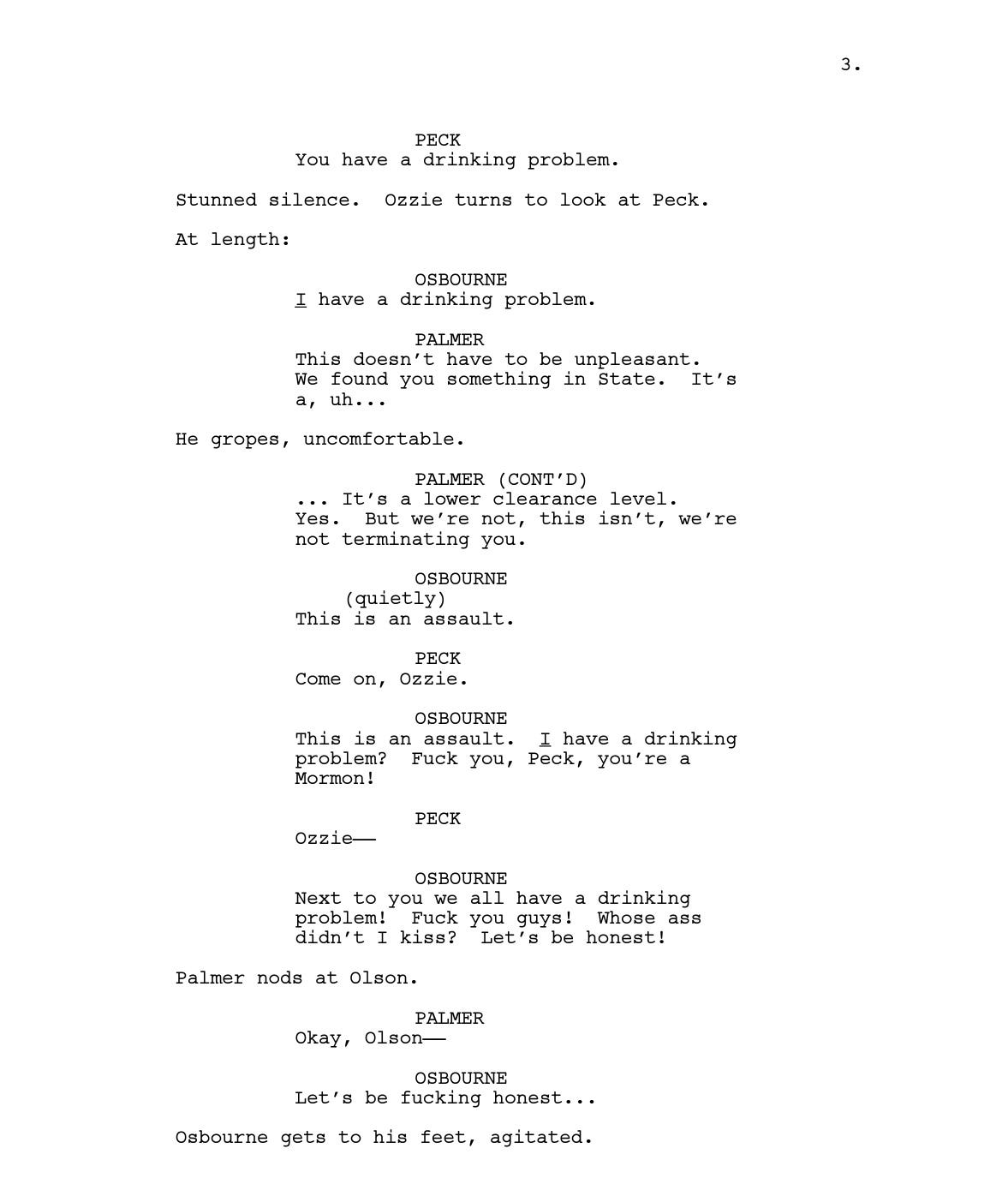
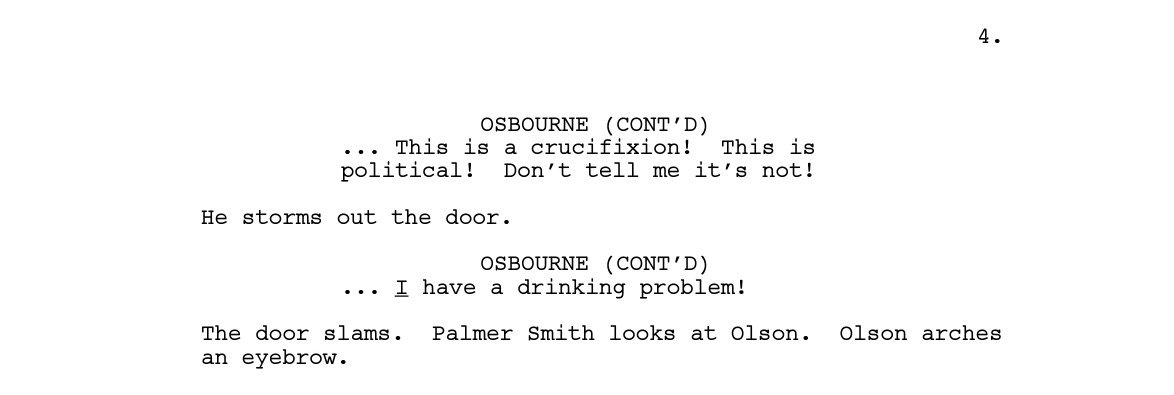
Uncomfortable situations, where characters have to say something that’s bound to upset another person’s feelings or turn controversial, are a great way to find the humor in tense circumstances. Take the opening scene in which Osbourne’s superior, Palmer, has to inform his subordinate that he’s being transferred. Here’s how Osbourne reacts; notice how it turns unexpectedly funny the longer the scene goes and the more uncomfortable the people feel.
To Write Or Not To Write For Actors Specifically: That Is The Question (Or Is It?)
Whether you are an established filmmaker or not, it’s always frowned on the practice of writing a script with specific actors in mind (unless you are William Shakespeare writing for your troupe of actors). The Coen brothers didn’t get the memo; they wrote the characters in Burn After Reading with certain actors in mind—all of whom ended up being cast in the parts:
George Clooney as Harry Pfarrer;
Brad Pitt as Chad Feldmeister;
Frances McDormand as Linda Litzke (also happens to be Joel Coen’s wife);
John Malkovich as Osbourne Cox;
Richard Jenkins as Ted, the Hardbodies gym manager.
“We wanted to throw these specific actors together in a fun story, and it all kind of derived from that exercise,” adds Ethan Coen.
It was also their first totally original screenplay since The Man Who Wasn’t There1. Though it’s tempting to argue that Burn After Reading is a commentary on surveillance of citizens, it is mostly the “conflation of political and personal paranoia” that combines the political thriller and romantic comedy genre, creating an unusual hybrid that is fascinating and a little frustrating. Ethan Coen referred to the script in the press notes as their take on a “Tony Scott/Jason Bourne movie, without the explosions”; they also cited Otto Preminger’s 1962 political thriller Advise and Consent as an influence. Maybe. It’s hard to know what to believe.
Though the script just crosses the 120-page mark, the actual film runtime is 90 minutes. Burn After Reading is as lean on the page as on the screen. Remarkably, it was one of a trio of scripts that Joel Coen and Ethan Coen wrote around the same time during the aughts2. All three scripts would be filmed and released in a three-year period; all three told tales in different styles. It might not be peak Coen brothers’ material; but even so, it’s very good material.
What, though, is Burn After Reading about? It’s hard to say. Perhaps we give in and accept that truth is pointless.
Notes:
Coen Brothers Book: Read This Exclusive Excerpt About the Making of ‘Burn After Reading’
Strikers’ dilemma: to write or not
Q&A;: Coens return to old ‘Country’
A script that was not a work-for-hire, a remake, or an adaptation.
The other two were A Serious Man and No Country for Old Men.